
When you order an aluminium fence, gate or railing, at some point a question comes up that puzzles many people: “Would you like powder-coating or anodising?” It sounds like a technical detail for tradesmen, but it’s actually a decision that determines how your product will look for the next twenty years. Both processes are top-quality and both protect the aluminium — but they give a completely different look and a different price, so it’s worth understanding the difference before you decide.
In this article we explain both finishes simply, with no technical jargon, and help you choose the right one for your project and budget. Let’s clear one thing up straight away: neither is “better” in absolute terms. They’re different, and each has its place — the only question is what suits you.
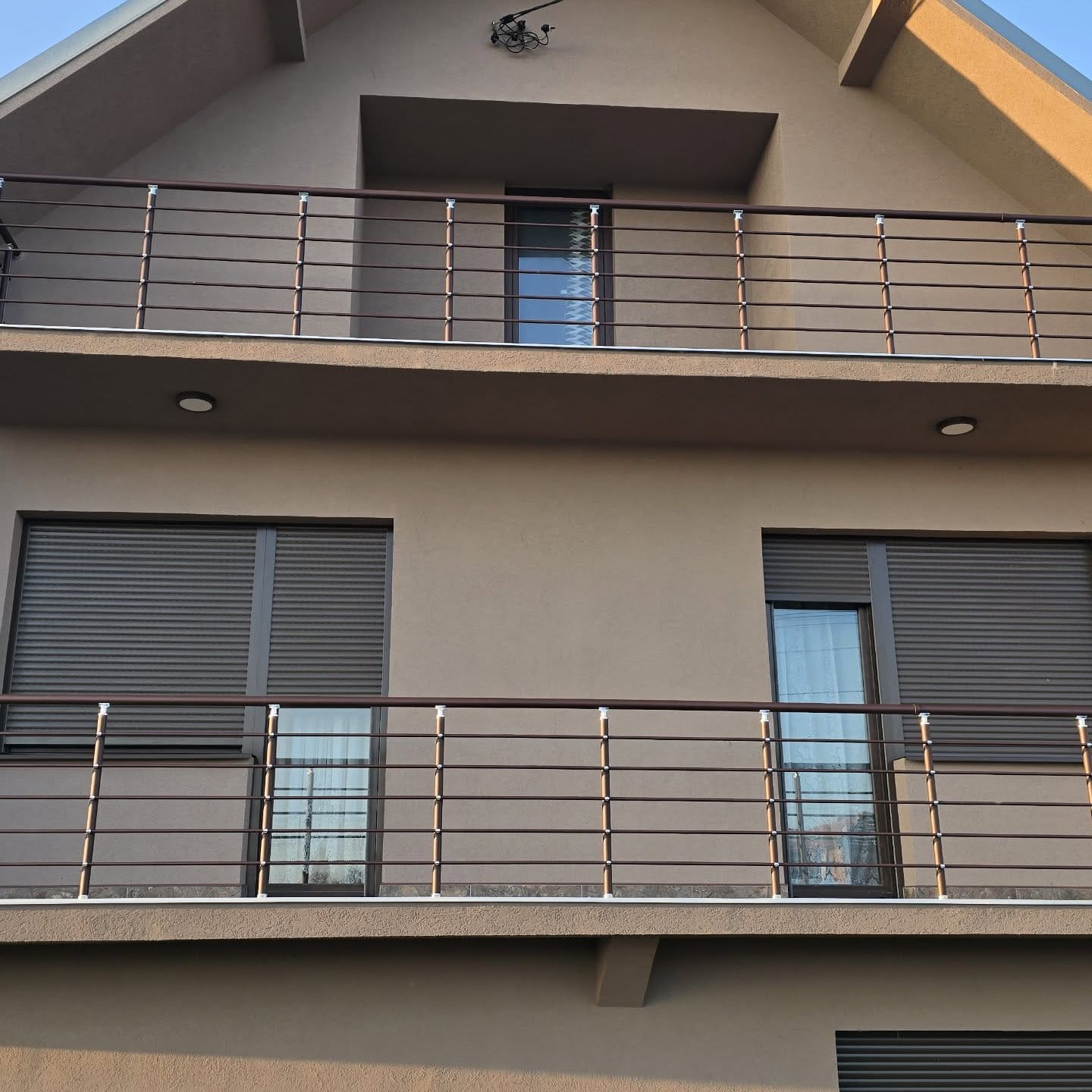
What powder-coating is, in brief
Powder-coating is a colouring process in which a fine powder paint is applied to the aluminium and the whole element is then baked in an oven at a high temperature. Under the heat the powder melts and fuses with the surface into a hard, smooth layer that becomes one with the metal. The result is a lasting, even colour that doesn’t peel like ordinary paint and keeps its look for an exceptionally long time.
The biggest advantage of powder-coating is freedom of colour. The whole RAL palette is available — hundreds of shades, in matte or gloss — so you can get exactly the colour that matches your façade, joinery or roof. From classic anthracite grey, through black and white, to specific tones on request. That’s why powder-coating is the most common choice for fences and gates: it gives you complete control over the colour.
On top of that, powder-coating is more affordable than anodising, so for most projects it’s a perfectly logical and excellent choice. When you want a particular colour and good value for money, powder-coating is nearly always the right answer. That’s exactly why we do it most.
What anodising is, in brief
Anodising is a completely different process. Instead of colour being applied “over” the metal, anodising uses electrochemistry to create a thin, exceptionally hard layer on the surface of the aluminium — in essence, the natural protective layer aluminium already has is reinforced in a controlled way. The key difference is that this layer forms out of the metal itself, so it becomes an inseparable part of it.
Because of that, anodising gives that special, natural metallic sheen — the look of a precious metal rather than a coloured surface. The tones are metallic: natural silver, champagne, gold, bronze and dark “inox”. They shimmer nicely in the light and feel deeper and “livelier” than ordinary colour. It’s that premium look you see on expensive shopfronts, luxury façades and top-quality joinery.
Since the layer forms out of the metal, an anodised finish can’t peel — there’s nothing to come off. It’s very hard and scratch-resistant, often even more resistant to mechanical damage than paint. Its drawback, if it can be called that, is twofold: it doesn’t offer the freedom of full colour that powder-coating does (it works in metallic tones), and it’s more expensive because the process is more demanding.

The key differences in one place
To sum up the essentials, so it’s crystal clear. On looks: powder-coating gives full colour (any RAL shade), anodising gives a metallic sheen (tones of champagne, bronze, steel). If you want an exact colour — say anthracite to match the façade — that’s powder-coating. If you want the aluminium to look like a precious metal — that’s anodising.
On price: powder-coating is more affordable, anodising is premium and more expensive. On durability: both are very hard-wearing and need no maintenance; the anodised layer is a touch harder against scratching, while powder-coating excels at colour fastness in the sun. On maintenance: with both there’s practically none — an occasional wipe is enough.
In practice, many clients combine the two: powder-coating on most elements where colour matters, and anodising on the parts meant to “shine” — for example, on a showpiece entrance gate. You don’t have to choose one for the whole property; we can make you a combination that both looks good and makes sense on price.
How to decide for your project
The decision comes down to three questions. First: does a particular colour matter to you? If so — powder-coating, because anodising doesn’t give full colours. Second: how important is the “premium” impression to you and what’s the budget? If you want the property to look exclusive and the budget allows — anodising pays off through a look that stays with you. Third: where is the finish going? For larger surfaces and fences where colour and a sensible price matter, powder-coating; for showpiece, prominent elements where you want the effect, anodising.
Our approach is simple and honest: we never push the more expensive finish just because it’s more expensive. If we think you’ll get the same desired impression more cheaply through powder-coating in the right tone, we’ll tell you so openly. Our aim is for you to be happy with the result and to recommend us, not to charge the maximum.
The best way to decide is to see both in person — the metallic sheen of anodising is lost in a photo, but in the light it makes an impression. So ☎ call +381 62 384 667 or send an enquiry; we come out, show you samples of both finishes and advise you on what pays off most for your project, with no obligation whatsoever.
Over the years — how both finishes behave
Since both finishes are chosen “for the long haul”, it’s worth knowing how they look over time, because that’s where their true value shows. Powder-coating, when done well, keeps its colour exceptionally long. The secret is in the preparation and the baking: well-cleaned and degreased aluminium, then a powder that melts into an even layer resistant to UV radiation. Such a colour stays fast for years — anthracite stays anthracite, not a faded grey. Cheap, poorly prepared variants are another story, and that’s exactly where the difference between serious and sloppy work hides.
Anodising shows its own special advantage over the years: since the layer is part of the metal itself, it can’t peel or “come off”, so the metallic sheen stays the same even after many seasons. It’s resistant to scratching and wear, which is handy on parts that are often touched, like a handrail or a gate you open every day. Over time it doesn’t yellow or fade like ordinary colours, because it isn’t a colour — it’s refined aluminium.
In practice that means with both finishes you have no maintenance to do — no painting, sanding or refreshing. The only difference is what you look at for those twenty years: with powder-coating, the colour you chose; with anodising, the natural metallic sheen. Both age well when done properly; they only do badly if the preparation and material were skimped on. So whichever finish you choose, more important than the choice itself is that it’s done by someone who does it right — and we stand behind our work with a 20-year warranty.
Frequently asked questions
What’s the main difference between anodising and powder-coating?
Powder-coating gives full colour from the RAL palette (the colour is applied and baked); anodising gives a metallic sheen where the “colour” forms out of the metal itself. Anodising is premium and more expensive.
Which finish is more durable?
Both are very hard-wearing and need no maintenance. The anodised layer is a touch harder against scratching; powder-coating is exceptionally fast in the sun.
Which is cheaper?
Powder-coating is more affordable and that’s why it’s the most common choice. Anodising is more expensive because the process is more demanding, but it gives a premium look.
Can I get an exact colour with anodising?
No — anodising works in metallic tones (champagne, bronze, silver, dark inox). For an exact colour (e.g. anthracite) you choose powder-coating.
Can anodising peel?
No — the layer forms out of the metal itself, so there’s nothing to come off. That’s one of its main advantages.
When should I choose anodising?
When you want a premium metallic look and the budget allows — especially on showpiece elements like an entrance gate, or on the façades of contemporary architecture, where the metallic sheen supports a minimalist look and conveys seriousness and quality.
When should I choose powder-coating?
When you want a particular colour or the best value for money — which is the case for most fences and gates. If the fence needs to blend into an exact tone of the façade or joinery, powder-coating is nearly always the right choice because it gives full freedom of colour.
Can I combine both finishes?
You can — powder-coating is often used on most elements and anodising on the parts meant to “shine”. That way you get a premium accent where it’s most noticed and a sensible price on the rest, and it all still looks like a coordinated whole.
Does either finish need maintaining?
Practically not — with both, an occasional wipe is enough. No painting or refreshing, and that’s exactly why we stand behind both finishes with a 20-year warranty; when the job is done right, the look stays the same after many seasons.
How can I see the difference in person?
Call +381 62 384 667 or send an enquiry — we bring samples of both finishes for you to see in the light and help you choose, because the metallic sheen of anodising simply doesn’t come across properly in a photo. The visit is free and with no obligation.
Related topics
- Powder-coating aluminium — colour of your choice
- Anodising — a natural metallic sheen
- RAL colours for fences — how to choose a shade
- Aluminium fences and gates