
A fence is one of those decisions you make once and then look at every day for the next twenty years. That’s exactly why it’s a shame to choose one in a hurry, “the way the neighbour did it”, or purely on the lowest price. A good fence is one that suits your yard, your way of life and your house — and you get there by asking yourself a few of the right questions before you even request a quote.
This guide walks you through those questions. It isn’t an advert for one type of fence, because there’s no fence that’s best for everyone — there’s the one that’s best for you. Once you’ve read this, you’ll know what you’re looking for, so the conversation with the installer will be much easier too, and the result far closer to what you had in mind.
First question: how much privacy do you really want
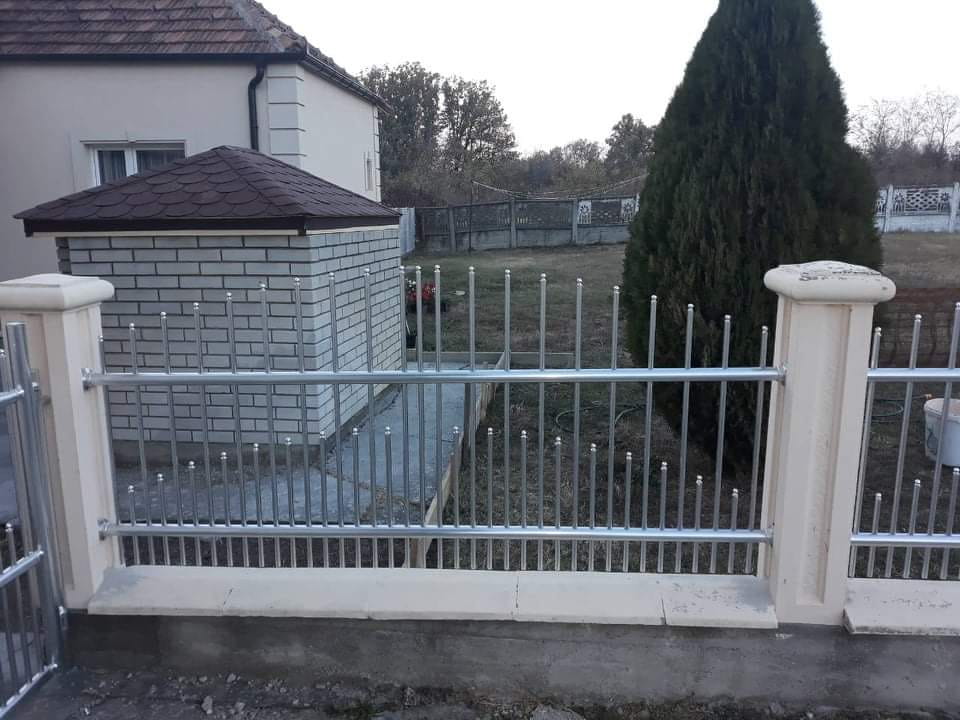
This is the question everything starts from, because it does the most to determine how the fence will look. Picture how you use the yard. Do you sit on the terrace and find the view from the street bothersome? Do your windows look straight onto the neighbour’s house? Or do you prefer an open, airy space where you can see the greenery and never feel “boxed in”?
If privacy is your priority, you lean towards denser infill or a panel fence that blocks the view and creates a screen from the street. If you like lightness and openness, a vertical fence with spaced infill is the natural choice — it marks out the space without stifling it. And very often the smartest solution isn’t “either/or” but a combination: a solid, private fence where you look onto the street or a neighbour, and something airier towards the parts where you want the house to be seen and the yard to breathe.
You don’t have to work this out perfectly on your own. But if you come to the installer with a clear picture — “I need a screen here, not there” — you’ll get a solution tailored to you, rather than the standard fence they’ve “always made that way”. That’s the first and most important step towards a fence you won’t be swapping out in five years because you’ve realised it doesn’t suit you.
Second question: which style goes with your house
A fence doesn’t stand alone — it’s in constant conversation with your house, its façade and its surroundings. A fence that doesn’t match the house looks like a foreign part, however lovely it may be in itself. So the second question is: what character does your house have?
For contemporary, minimalist houses, clean lines work beautifully — vertical or panel infill in anthracite or black, or glass fences that give that modern, “high-end” look with no barriers. For houses of a warmer, more traditional spirit, warmer tones and more classic lines sit better. If you have plenty of wood and stone in the yard, brown and darker earthy tones fit in naturally.
Here colour plays a huge role, and it’s achieved through powder-coating in any RAL shade. The safest move is to match the fence to something you already have — most often the colour of the joinery (windows and doors) or the roof. When the fence “agrees” with at least one element of the house, the whole property looks considered. And don’t forget the gate: a fence and gate in the same tone give an impression of unity that lifts the value of the whole house.
Third question: terrain, safety and who uses the yard
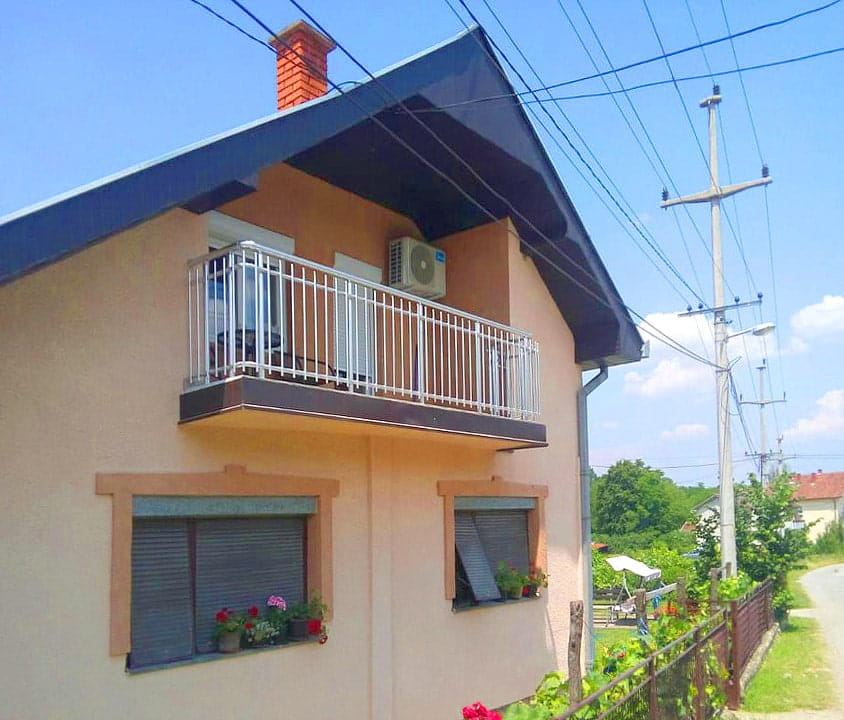
The practical side matters just as much as the look, and it’s often skipped until it’s too late. First, the terrain. Is the yard flat or sloped? Vertical infill adapts easily to a fall in the ground, while some other builds call for more care. If the ground is uneven, that needs to be known in advance, because it affects both the look and the price.
Second, who uses the yard. If you have small children or dogs, the spacing of the infill and the height of the fence aren’t an aesthetic question but a safety one — the fence has to be such that a child can’t slip through or climb over and a dog can’t escape. That’s something we always put ahead of looks when there are little ones in the yard. Third, maintenance: if you don’t want to fuss over the fence every season, aluminium is the clear choice — it doesn’t rust, it isn’t painted, you just wipe it down now and then.
And fourth, think ahead. Are you planning a pool, a garden, a carport? A fence that makes sense today should also make sense with whatever the yard is yet to become. A good installer will ask you exactly these things — the terrain, the children, your plans — because the answers decide which solution is truly right. If nobody asks you that and instead offers a price straight away, it’s a sign they’re selling you what suits them, not what you need.
Aluminium, iron or PVC — and why the material is decisive
Once you’ve settled the look and the purpose, the material remains — and it decides how happy you’ll be over the years. Iron (a wrought fence) is lovely, especially on traditional houses, but it rusts and needs regular repainting; that’s a cost in time and money that adds up. PVC doesn’t rust, but it fades in the sun and turns brittle in frost. Aluminium combines the best of everything: it doesn’t rust, it’s light yet strong, it comes in any colour and it needs practically no maintenance.
So when you’re choosing a fence for your yard, the material isn’t a “technical detail” — it’s the difference between a fence you install and forget and one that becomes a job for you every year. A quality aluminium fence costs a little more at the start than the cheapest solutions, but over ten years, once you add in the maintenance, it almost always turns out to be the most cost-effective.
If these questions have given you a clearer picture of what you want — excellent, that’s half the job done. We’ll take over the other half: we come out to the site, look at the yard in person, listen to what you’ve imagined and propose a concrete solution with a clear price. ☎ Call +381 62 384 667 or send an enquiry; the visit and the quote are free and with no obligation, and you get a fence tailored to your yard exactly.
Five mistakes people most often make when choosing a fence
Over the years we’ve seen which decisions people most often regret, so here they are in one place — for you to skip them. The first is choosing purely on the lowest price. The cheapest quote almost always saves on what you don’t see on day one: thinner material, weaker anchoring, poorer paint. That saving comes back within a few years, and at a higher cost.
The second mistake is the same height and the same infill everywhere. There’s no need to pay for a full, tall fence along a part of the yard nobody looks at; match each side to its purpose and you’ll get both a nicer result and a more sensible price. The third mistake is neglecting colour — a fence painted “just to be grey” without matching the house looks like a foreign part. Take the tone of the joinery or the roof and everything falls into place at once.
The fourth is putting it off out of fear of mess and complications. With an aluminium fence most of the work is done in the workshop, and the installation is quick and tidy; there are none of those “weeks of chaos” people dread. And the fifth, perhaps the most important: choosing the wrong material. Many pick iron, which rusts and needs painting, because of its lower starting price, and then wrestle with it every season. Avoid these mistakes and the fence stops being a worry and becomes what it should be — something you’re proud of without ever having to think about it.
Frequently asked questions
Which type of fence is best for a yard?
The one that suits your need for privacy, the style of your house and the terrain. Vertical is airy and classic, panel gives privacy, glass a modern look. Often a combination is best.
How do I match the fence to the house?
The safest way is to take the tone of the joinery or the roof. When the fence agrees with at least one element of the house, the whole property looks considered. We choose the colour through powder-coating with samples.
Is aluminium better than iron for a fence?
For most people, yes — it doesn’t rust, needs no painting and comes in any colour. Iron is lovely, but it needs regular maintenance.
How do I choose a fence if I have children or dogs?
Look at the spacing of the infill and the height — the fence has to be such that a child can’t slip through or climb over. That’s a safety question we put ahead of looks.
Can a fence follow the slope of the ground?
It can, especially vertical infill, which we adapt easily to a fall in the terrain without ugly gaps at the bottom. The slope needs to be known in advance, as it affects the look and the price; we assess it on site during the free visit.
How much privacy do I really need?
It depends on how you use the yard and where you look out. You don’t need the same fence everywhere — a full screen where it’s needed, airy where it doesn’t matter.
Should I do the fence and gate together?
We recommend it — in the same tone and style they look like one whole and lift the value of the house, and the job is simpler when it’s done together.
How much does a fence for a yard cost?
It depends on the length, height, infill and colour. The most accurate way is for us to come out and measure up; we write more about the price factors in the article on the cost of an aluminium fence.
Does an aluminium fence require maintenance?
Practically none — an occasional wipe when you’re tidying the yard anyway is enough. No rust, painting or sanding, which is one of the main reasons aluminium pays off more than iron and PVC in the long run.
How do I get started?
Call +381 62 384 667 or send an enquiry. We come out, look at the yard in person, listen to what you’ve imagined and propose a made-to-measure solution with a clear price — all free of charge and with no obligation to order anything.
Related topics
- Aluminium fences (overview)
- Vertical, panel and glass fences
- The cost of an aluminium fence — what it depends on
- Powder-coating and RAL colours — how to choose a shade
- Aluminium gates — match the gate to the fence