
The colour of a fence is one of those decisions that seems small while you’re making it, and then you look at it every day for the next twenty years. The right colour makes the fence “sit” with the house as though it had always been there; the wrong colour jars and spoils the impression even when the fence is superbly made. The good news is that with aluminium you have a practically unlimited choice — and these few tips from experience will help you pick a shade with no regret.
With us the colour is achieved through powder-coating, a process that bakes the colour into a lasting layer, so it doesn’t fade or peel for years. That means the choice of colour isn’t “temporary” — you’ll be choosing something you’ll live with for a long time, so it’s worth doing it right the first time.
What RAL is and why it gives you freedom
When you hear “RAL”, it refers to a standardised colour catalogue — a system of hundreds of precisely defined shades, each with its own number. It’s the same language manufacturers use across Europe, so when you say “RAL 7016”, everyone knows exactly which grey you mean, with no guessing and no “roughly”.
For you as a customer that means one wonderful thing: freedom. You aren’t limited to “black, white or grey” — you can get almost any shade that comes to mind, and exactly that one, not an approximate version of it. Want a fence in the tone of your façade? There’s a RAL for that. In the colour of the joinery or the roof? For that too. That precision is why powder-coating is so rewarding — the colour isn’t a compromise but a choice.
Along with the colour number you also choose the finish: matte or gloss. Matte gives a subtle, contemporary look with no glare and is much in demand today; gloss feels livelier and is easier to clean. There are also textured (slightly rough) variants that are pleasant to the touch and nicely mask small imperfections. These are all tools for making the fence look exactly how you want — and we help you choose the combination that makes sense for your house.
The colours that work best — and why
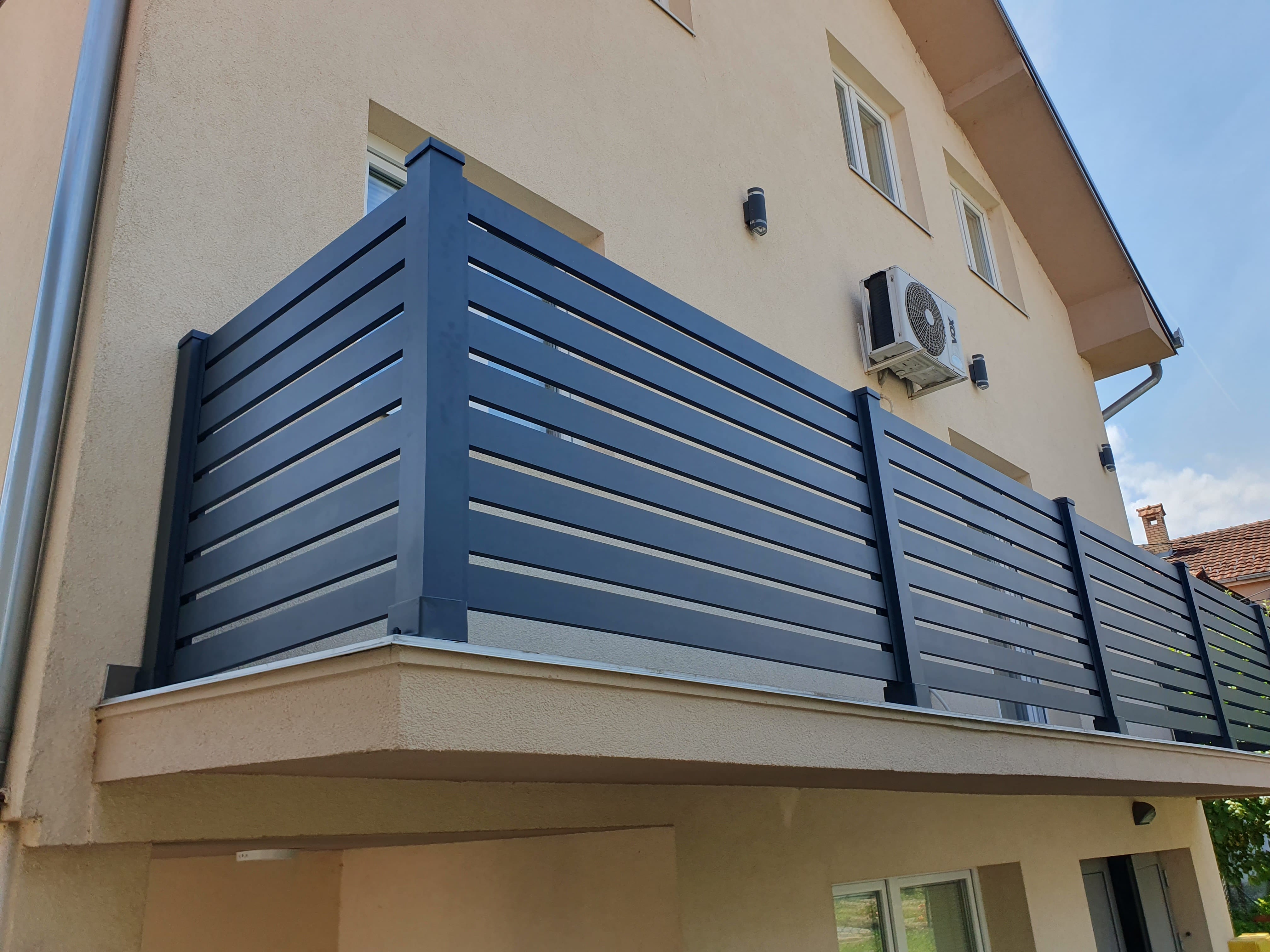
Although the choice is enormous, in practice a handful of shades stand out as eternal favourites, and for good reason. By far the most in demand is anthracite grey (RAL 7016). It looks modern, neutral and “expensive”, and it goes with almost any façade — from white and grey to wood tones. If you’re not sure what to choose, anthracite is nearly always a safe move.
Black (RAL 9005) gives a strict, elegant and luxurious look, a special something on modern houses — just bear in mind that dark colours heat up a little more in strong summer sun and that fine dust shows up on them slightly more easily. White is clean and bright, lovely with light façades and a Mediterranean style. Dark green (RAL 6005) blends naturally with greenery and “disappears” into the yard in the loveliest way — excellent if you want the fence to be discreet. Brown tones (like RAL 8017) go beautifully with wood, stone and houses of a warmer character.
There’s no “wrong” colour in itself — there’s a colour that doesn’t match its surroundings. That’s why we never choose a colour in isolation, but in relation to the house. And for those who want something outside the RAL story, there’s anodising — a metallic finish in tones of champagne and bronze that gives an effect a solid colour cannot.

How to choose and not get it wrong
Here’s a rule I repeat to every client, because it saves you from the most common mistake: never choose a colour from a screen or a tiny sample on paper. The same shade looks completely different on a monitor, different again in a shop under artificial light, and different a third time on your house in daylight. Colour “lives” with light, shadow and surroundings.
That’s why we bring real samples for you to hold up against your own façade, in daylight. Look at them in the morning and in the afternoon, in sun and in shade — only then do you see how the colour really looks in your conditions. That small step has saved countless people from an afterthought of “actually, I don’t like it”, and a fence isn’t repainted as easily as a wall.
A second tip: match the fence to at least one element of the house — most often the joinery. If your windows are anthracite, an anthracite fence nearly always works. A third: think about the gate and other elements too; when the fence, gate and, say, the railings are in the same tone, the whole property looks considered and valuable. And finally — don’t shy away from advice. We’ve seen hundreds of houses and are glad to tell you honestly if we think another shade would sit better. In the end the decision is yours; our job is to give you everything you need to make it with a clear mind.
Why powder-coating keeps the colour for years
It’s worth understanding why we bother with the choice at all — because that colour really will stay. Powder-coating isn’t ordinary painting; the powder is applied to the aluminium and baked in an oven, where it melts into a hard, even layer that becomes one with the metal. Such a colour doesn’t peel and is far more resistant to the sun than classic paints that fade within a few seasons.
That means the shade you carefully choose today looks practically the same in ten years. Anthracite stays anthracite, not a faded grey; black stays deep. It’s precisely because of that permanence that the choice of colour matters — you’re not choosing for this season but for the whole life of the fence. And that’s exactly why we give a 20-year warranty: when the colour has to last that long, we choose it and apply it carefully.
If you’re thinking about a colour for your fence or gate, the best place to start is with samples on your own house. ☎ Call +381 62 384 667 or send an enquiry — we come out, show you the shades on the spot and help you choose, with no obligation whatsoever.
How a fence’s colour shapes the impression of the whole house
Few people realise how much a fence’s colour affects the way the whole house is perceived — and the difference is enormous. A fence is a large, continuous surface that frames your property; its colour sets the “tone” before the eye even reaches the façade. That’s why the same house looks modern and composed with an anthracite fence, and, with a mismatched light fence, say, can look muddled — even though it’s the same building.
Dark shades (anthracite, black) dominate today precisely because they “frame” the house and make light façades look cleaner and more contemporary — like a frame around a picture. Light and neutral fences feel softer and more Mediterranean, and go nicely with white and sandy façades. Green and brown “quieten” the fence and let nature and the house take centre stage, which is excellent if you have a lovely yard you don’t want the fence to overshadow.
There’s a psychological side worth mentioning too: matching colours send a message of order and care. When the fence, gate and details on the house are in harmony, the observer subconsciously concludes that everything was done thoughtfully and to a high standard. It’s the same mechanism by which a neatly dressed person seems more trustworthy — it isn’t superficial, it’s how the brain works. So the choice of colour isn’t a “small thing at the end”, but one of the moves that most affects how valuable your house appears. Invest those few minutes of thought in it; it pays off every time you come home.
Frequently asked questions
Which colours can I get for an aluminium fence?
Practically the whole RAL palette — hundreds of shades, in matte or gloss, including textured variants. From anthracite and black to specific tones on request.
What’s the most popular colour for fences?
Anthracite grey (RAL 7016) — modern, neutral and matching almost any façade. Black and white follow.
Do dark colours have any downsides?
Dark shades heat up a little more in strong sun and fine dust shows on them more easily. It’s not a problem, just good to know before choosing.
Does the colour fade in the sun?
Quality powder-coating is resistant to UV radiation, so the colour stays fast for years — unlike ordinary painting, which fades.
Matte or gloss — which should I choose?
It’s a matter of taste: matte is contemporary and glare-free, gloss is livelier and easier to clean. We help you decide according to the style of the house.
How do I know how the colour will look on my house?
We bring real samples for you to see against your own façade, in daylight. Never choose a colour from a screen.
What should I match the fence colour to?
The safest is the colour of the joinery or the roof. When the fence matches at least one element of the house, everything looks considered.
Can the fence and gate be the same colour?
Of course — and we recommend it. A gate and fence in the same tone look like one whole and lift the value of the house.
What if I want a metallic look rather than a colour?
Then anodising is the right choice — it gives a natural metallic sheen in tones of champagne, bronze and steel.
How do I get started with choosing a colour?
Call +381 62 384 667 or send an enquiry. We come out with samples, show you the shades on your own house and help you choose — with no obligation.
Related topics
- Powder-coating aluminium — how a lasting colour is achieved
- Anodising — a metallic finish as an alternative to colour
- Aluminium fences and gates
- How to choose a fence for your yard
- The cost of an aluminium fence